Progressive Die Market Keeps Growing: Upgraded Demand Meets a Precision Race
As China’s economy expands and its industrial structure adjusts, demand for progressive dies keeps rising, sustaining a very large market. International leading die makers continue investing in local production; meanwhile, thanks to the cost advantage of China’s tooling and stamping capacity, more overseas customers source global supply locally. Upgraded demand and international capacity layout run in parallel — the fundamental picture of today’s progressive die market.
Three downstream demand drivers
- New energy vehicles: drive-motor stator/rotor cores, battery connectors and structural parts — high volume, tight tolerances, fast iteration;
- Appliance efficiency upgrades: motor cores and precision structural parts keep scaling with energy-efficiency standards;
- Industrial automation and power tools: steady growth in precision transmission parts, terminals and structures.
Three steps of the precision race
- Feed and station accuracy: positioning accuracy at high speed directly sets achievable tolerances;
- Process integration: more stations integrating blanking, forming and clinching reduce downstream operations;
- Life management: stroke-count ledgers and edge maintenance plans secure long-run stable production.
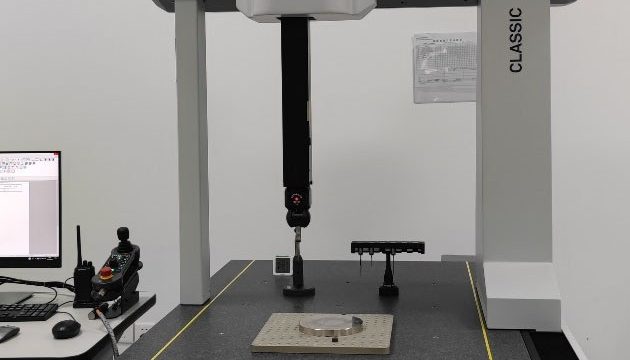
Supporting this trend requires sustained investment in simulation, wire-cut EDM and CMM inspection, extending precision control from tooling build into the entire mass-production process — die precision will only get higher, and that direction is certain.
Impact on sourcing strategies
Buyers are adjusting: more localized supply layouts, dual sourcing for critical parts, and heavier weighting on responsiveness. Machining capability alone no longer justifies a supplier choice.
Our observation
Working with customers, we see buyers valuing “solution capability” more than mere “machining capability”. Whether a supplier can point out optimization opportunities in strip design, material selection and inspection planning at the drawing stage is becoming the core competitive variable — which requires putting process engineers at the front of quoting and review. That is exactly why we built our one-stop project team.
Have drawings? Send them to us for an assessment of feasibility, precision and lead time.