Four Root Causes of Slug Pulling in Stamping
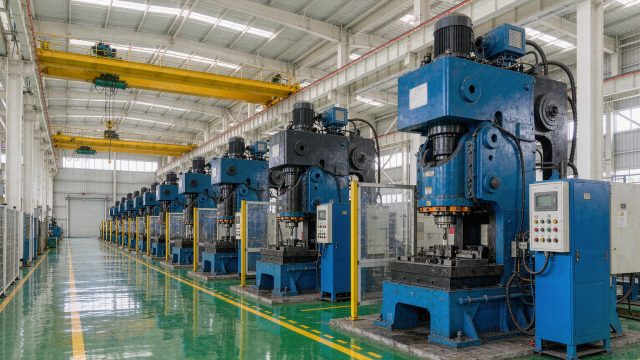
Slug pulling (slugs carried back by the punch, jamming or landing on the die surface) is one of the most common shop-floor problems in stamping: it scratches parts and strips at best, and chips cutting edges or forces downtime at worst. The good news: most slug pulling traces back to four causes, and a systematic check usually locates it.
Four causes: symptoms and fixes
| Cause | Field symptom | Fix |
|---|---|---|
| Dull edge (growing radius) | Pulling appears gradually with output; burrs grow meanwhile | Regrind on a stroke-count schedule, before failures |
| Insufficient penetration | Starts right after die change or adjustment, fixed location | Set penetration to the specified value — not by feel |
| Improper clearance | New die pulls slugs; cut-band ratio abnormal | Verify clearance size and uniformity; rework edges if needed |
| Oily strip | Appears after oil change or heavier oiling; slugs stick to punch face | Control oil quantity/viscosity; switch to a faster-evaporating oil |
In detail: the larger the edge radius, the weaker the material’s grip on the slug; each station has a specified penetration below which the slug is not fully seated; excessive or off-center clearance changes cut quality and slug behavior; and a viscous oil film readily sticks slugs onto the punch.
Engineering aids
- Slug pins / spring ejectors for forced mechanical ejection;
- Micro-eccentricity or shear angles on punch faces, using the tight-clearance effect to keep slugs on the die side;
- Air blast or vacuum assist — effective for small slugs and high-speed runs;
- Optimizing die-hole taper and surface finish so slugs fall freely.
Preventive maintenance
- Keep a stroke-to-regrind ledger; regrind on schedule, not on failure;
- Check drop chutes and slug boxes at every die change;
- Log which station and when pulling occurs — a medical record for each die.
If slugs keep troubling your line and the four-cause check does not resolve it, contact us for a dedicated analysis — including clearance re-measurement and strip-process review.
Have drawings? Send them to us for an assessment of feasibility, precision and lead time.